Many organizations have a lot of non-HTML document files. Word docs, PDF files, Excel spreadsheets, Powerpoint presentations, and the list goes on.
This can be an annoying experience if the link surprisingly opens an Excel spreadsheet when the user didn’t expect that. And it’s even more obtrusive if they are browsing on a mobile device and this happens.
The solution
What we need to do is dynamically display the file type next to all such hyperlinks using CSS. We could manually insert text for this, but a dynamically inserted icon is a better solution. In the past this method has been called link markers, or CSS cues, but basically they are just file type indicators.
First, lets write some HTML for the various hyperlinks.
Each of these links are just the very basic code that you would need to insert a hyperlink.
No classes are needed because CSS can select each of these links using sub-string matching attribute selectors, demonstrated below. We are only interested in the file name at the end of the URLs.
a[href $=".pdf"] {
   padding-right: 18px;
   background: transparent url('images/icons/pdf.gif') center right no-repeat;
}

a[href $=".xls"] {
   padding-right: 18px;
   background: transparent url('images/icons/xls.gif') center right no-repeat;
}

a[href $=".doc"] {
   padding-right: 18px;
   background: transparent url('images/icons/doc.gif') center right no-repeat;
}


a[href ^="http://"] {
   padding-right: 20px;
   background: transparent url('images/icons/external.gif') center right no-repeat;
}

a[href ^="mailto:"] {
   padding-right: 20px;
   background: transparent url('images/icons/mailto.gif') top right no-repeat;
}

a[target="_blank"] {
   padding-right: 18px;
   background: transparent url('images/icons/newwin.gif') center right no-repeat;
}
The CSS code above basically detects the file extension at the end of the hyperlink in HTML, and adds just enough padding on the right side of the link to display a small background image icon that indicates the type of file before they click on it.
There are many types of investors. Stock investors, real estate investors, crypto investors, and the list goes on. But in this article we will discuss a particular type of stock investor: the kind who focuses on dividends.
Lets say for example, you decide to purchase some shares of the Nike stock. When Michael Jordan releases a new pair of shoes, the sales from the shoe takes off. Nike makes profit from the sale. They turn around and re-invest the profit into the business. Then they pay a portion of the profit as a dividend to shareholders (you).
The more shares of a stock you buy, the more dividends you will earn. Not all stocks pay dividends, but some pay dividends yearly, others quarterly, and others monthly.
A dividend is a payment made by a corporation to its shareholders, usually as a distribution of profits.
Wikipedia
Reaching financial independence
Financial independence is when your assets (investments) are large enough that they yield returns (dividends) to cover all of your expenses. Many investors view the point of earning $1000 in dividends each month as the first step towards financial independence.
Lets do some math, to figure out what it would take to get there with a relatively small stock. So lets take for example, Office Depot (ODP).
As of writing this blog, ODP costed about $3 per share. It returns a dividend payout of about $0.10 cents. So $1000 ÷ $0.10 = 10,000. And $3 x 10,000 = $30,000. So you will need 10,000 shares (approx $30,000) of ODP in order to see a dividend return of $1000 quarterly.*
You might be wondering why you should even care. What’s the advantage here? Here are a few things to consider.
1) Cash flow
A dividend is your share of the profits.
If you gain enough cash flow from dividends you could reach financial independence. What this means is no more trading hours for a paycheck. You’ll have your money working for you, to generate more money.
On dividend.com there is a long list of dividend stocks that will pay you every month. You can use these stocks to start to generate cash flow. If you invest in enough of these kinds of stocks, you can earn dividends almost every day.
2) Lower taxes
There is a Much lower tax liability. Your federal income taxes for those dividends is MUCH lower than your taxes from earned (job) income.
Dividends are taxed at 20%, 15%, or 0% rate, depending on your tax bracket. This means that the amount of taxes you pay on dividends will depend upon your earned income, and this of course may vary.
If you never purchased stocks or earned dividends before, don’t worry. It’s better to start at the bottom than not at all. And its also getting much easier to do so with apps like Robinhood and M1 Finance.
* (ODP pays quarterly, but many dividends pay monthly)
Disclaimer: This article was written for educational and entertainment purposes only. This is NOT financial advice. Always do your own research and please consult with a licensed attorney before making any serious investment. We are not responsible for any investment decisions that you choose to make.
Imagine getting a notification on your phone that a delivery has just arrived at your front door. You come outside and pick up a package, not from a human carrier—but from a fully autonomous six-wheeled robot.
Meet the Amazon Scout.
This is Amazon’s latest technological innovation, designed to improve the “last mile” segment of package delivery.
The Scout’s delivery method is more time efficient than a human carrier, because its done by a mathematical algorithm. Plus, multiple robots can cover more ground in a shorter period of time than one person.
Right now the Scout is limited to smooth surfaced sidewalks, but eventually the goal is that it will navigate stairs, complex obstacles, and various rough terrain.
Amazon claims that these devices were “created by Amazon” but it should be noted that the original design of this robot was created by Starship Technologies. Also, this same device was previously tested by companies such as Dominos Pizza, DoorDash and Pepsi.
Hitting the streets
Amazon has already begun testing it with just six Amazon Scout devices, delivering packages during daylight hours in the neighborhoods of Snohomish County, WA.
Trying to deliver perishable food (that needs to stay warm/fresh) may not turn out as well as delivering packages, especially if this robot moves at the speed of a human walking. But the cost savings alone is a huge benefit of using this device for a job that hasn’t changed much in centuries. It’s a remarkable technological improvement over relying upon human labor.
However, reactions from consumers indicate that many people are skeptical that such a device could survive out in public.
@saracsalinas How will Amazon Scout survive in bad neighborhoods and neighborhoods bordering bad ones. We live in a world where people feel it’s OK to steal packages.
Sara Salinas via Twitter
Google has made no official comments regarding this, but these devices come equipped with multiple cameras all around, so they can “see” what you do to them, they have an internal GPS tracker, and the “hood” will remain locked unless someone with the (Amazon) app approaches to unlock it.
So unless someone forgets to properly close the hood so that it locks, the chances of theft are VERY unlikely. In fact, someone already tried.
Huge cost savings
Any company that can successfully achieve automation by this means could potentially save themselves billions of dollars each year.
A standard delivery driver might earn a salary of around $40k to $50k/year. But these robots cost just a one-time price of $5,000 and of course, as the technology improves that price is getting cheaper.
In Washington D.C these robots are not just surviving, they are thriving. As the D.C. Council just recently passed legislation to permit the large-scale deployment of delivery robots across the city. So you might see them popping up soon in a neighborhood near you.
The statement that ‘everyone is an addict’ is not superficial. In today’s society unfortunately it’s true. Everyone is addicted to something.
Most addictions are culturally recognized as addictions, like smoking, recreational drug use or alcoholism. And beyond these, there are also more subtle addictions that most people don’t even consider to be addictions. What could those be?
To name a few: watching television, using the internet, social media, drinking coffee, eating sugar/junk food, online shopping, and using your smartphone. Find this hard to believe? When was the last time you went an entire day without using one or more of the aforementioned things?
Some of these things may not seem like addictions but believe me—if you withheld one or more of them from yourself for an extended period of time (like 1 or 2 weeks) the withdrawal symptoms you’d experience would feel very real.
So the title of this article is obviously an unpopular truth, but even more striking than that, here is another true statement that will rattle your brain:
ALL ADDICTIONS ARE BAD.
I’ll say it again. ALL addictions are bad. Even the ones that don’t seem so bad, like sugar and comfort.
By now you are probably wondering, “Why?”
Because any time you lose control of your own actions—regardless of how insignificant—you do something that you know is contrary to your own free will and personal well-being.
Naturally, everyone should be able to make choices which they know will bring themselves the most benefit. But addictions don’t allow you to do that.
So called “positive addictions” are just good habits.
evolvingman.com
If you are engaging in, or taking in too much of something because of some internal compulsion to do so, but you’d rather not, then this action is detrimental to you in some way. It’s an addiction and it should be avoided. Yes, feeding the addiction may satisfy your immediate internal craving, but long term its causing damage to you.
For example,
Food addiction: People who eat so much food that it potentially harms their physical body, including their ability to walk, their ability to live long lives, their ability to get a date, etc. clearly lack self-control. Anyone who eats large quantities despite knowing that fatness can/does have negative effects is addicted to a certain degree.
Caffeine addiction: Withdrawal headaches and irritability are a sign you’re not doing something good for your body. The addiction would also limit wilderness expeditions or enjoying a culture that doesn’t drink caffeine.
Some ordinary every day habits might actually be an addiction.
Sex addiction: Sex addicts depersonalize sexual intimacy and compulsively desire sex itself (or pornography) without love/intimacy, which limits their ability to have meaningful sexual relationships.
Addictions make you push aside self-control, sound judgement, rational thinking, and they cause you to act and behave in a way that you would prefer not to, and if you had the self-control, you would choose to do otherwise.
To add to this issue, unfortunately in today’s world there are many external forces (including corporations that market addictive products and services) that come directly at you constantly trying to compete for control over your decision-making and habits. These external forces pull on you for your time and attention, they excite your senses, alter your perception, and get you to do what they want. Yes, some corporations today are intentionally conditioning people to not only become addicted, but to accept these addictions and behaviors as normal.
We will discuss some of these in more detail, but first we need to understand the true nature of addiction.
Types of addiction
There are three main types of addiction.
Chemical addictions, (smoking, alcohol, drug abuse) these are obviously bad because they alter your internal biological state or brain chemistry in a way that gives you immediate pleasure, but long term pain.
Behavioral addictions, (gambling, eating, sex, shopping) these are just like it sounds: an addiction to a certain behavior. The dopamine reward system in your brain exists so it can reinforce positive behaviors. The problem is that it doesn’t distinguish between healthy and unhealthy ones.
Conceptual addictions, (attachments to people or objects) these are often not recognized as bad because these seem “normal”. All of your friends are doing this or buying that, and often these kinds of addictions are so subtle and abstract that they can actually seem good for you because these are accepted by your peers. These addictions can linger for years and years and you never even notice that there is a problem.
It’s easy to rationalize some conceptual addictions as being good, since they seem normal, whereas with chemical addictions (drugs/alcohol) you will feel bad as a result of these wearing off so it’s easy to associate these ones as being bad. But in reality, they are all bad.
Ready for some specific examples? Lets dive in.
Misguided desire for love
Most people in society are supportive of “romantic love” when they see it, and this acceptance of it is also expected of them, but sometimes what people see in public is not the same as what goes on behind closed doors.
This woman who appears to be madly in love, is actually trapped in a toxic/abusive relationship with a controlling tyrant. Instead of facing the reality of her situation, she is addicted to the concept of being in love, and feels that she needs to get the approval of her man. So much so that she just cannot break away from this bad relationship. She cannot fathom what life would be like without having someone in her life, and she thinks she needs this kind of man.
Whats worse, even if/when she does breakup, she keeps coming back to awful relationships just like this one. Again and again, repeating the same cycle. Always being attracted to the same kind of man, which always ends up with the same inevitable outcome. Yet, even if the abusive relationship ends, there are usually withdrawal symptoms, sometimes severe. Just like every other addiction.
NOTE- Please do not misunderstand. I’m not saying don’t ever get married or fall in love. What I’m saying to use your head before listening to your heart. If your partner is abusive, that’s not real love. Get help, and tell someone you trust.
Dopamine Deficiency
Most people already know that using social media can be addictive, but they may not understand how, or why this addiction is harmful.
When a person posts a picture online and gets positive social feedback from others, it stimulates the brain to release a chemical called dopamine, which rewards that behavior. Dopamine plays a role in how we feel pleasure. Naturally, this elicits even more reward-seeking behavior in us. We crave more, so we post even more pictures, send more likes, and make more comments.
We humans are social creatures, and we need emotional support from others to be happy. So what’s the issue here?
You see, dopamine does more than just give you a feeling of pleasure, it also affects many parts of your behavior and physical function such as: Learning, Motivation, Heart rate, Blood vessel function, Kidney function, Lactation, Sleep, Mood, Attention and so on.
If you fiddle with brain chemistry, it can lead to a chemical imbalance; such as dopamine deficiency, which has symptoms that include depression, disturbed sleep, apathy, and no motivation in life.
Too much or too little [of dopamine] can lead to a vast range of health issues.
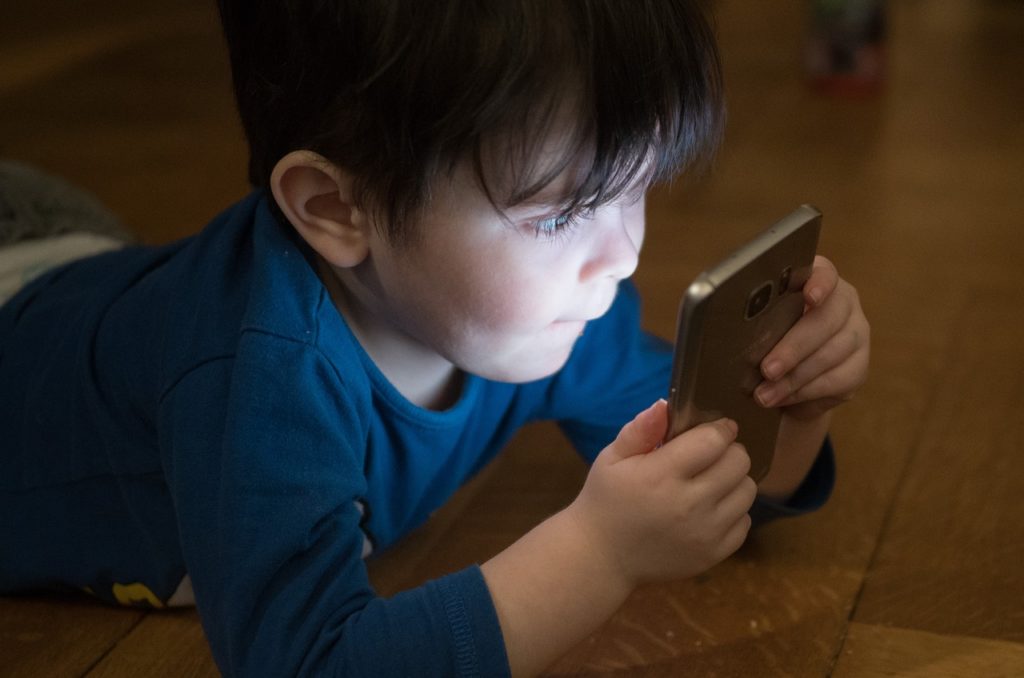
Have you ever wondered why you feel anxious and jittery any time your phone is not within an arms reach? Do you also feel that way every time your phone makes a beep, buzz or bloop? The urge to instantly grab your phone is almost impossible to ignore, like a drug addict who is craving his next hit. That’s your brain craving that next rush of dopamine. And it is far worse if you are constantly getting comments and likes from social media platforms that are designed to be addictive by nature.
These apps create a “look at me” culture of insecurity in people when they feel others ignore them or don’t pay attention to their posts. The companies that build these social media apps want your eyes and attention on their ads as much as possible, so they exploit of this aspect of human nature to keep you addicted and coming back.
Remember the days when people used to strike up conversations with total strangers on the bus and at the train station just to talk?
Back in those days people understood that inside another human brain is a lifetime of memories, interesting stories and layers of complexity. You can tap into some of that by just communicating with a stranger. But no one does this anymore. No one has time to show personal interest in the well-being of their fellow man/neighbor anymore because there is so much to do and see on their smartphone.
Who has time to be polite and courteous to strangers when your twitter feed never stops blowing up? Who wants to hear another persons voice and look into their eyes when you can simply send a quick text message and then go back to watching cat videos?
This shift is human social behavior seems to have happened so gradually that many haven’t even noticed it. But that’s how addiction usually begins.
The good news is that you can gradually reduce your dopamine intake. Turn off your phones social media notifications. And if possible, delete social media apps like Facebook and Twitter.
Never enough sugar
Research conducted by scientists on lab rats has found that sugar is even more addictive than opioid drugs like cocaine, and that there can be real withdrawal symptoms such as depression and behavioral problems when people try cutting out sugar completely.
The Global Industrial Sugar Market is expected to reach $45.6 billion dollars by the year 2027, in terms of value at a compound annual growth rate (CAGR) of 6.5% from 2020-2027.
Clearly, the addiction is real. People just can’t get enough of this refined white sugar and also fake sugar substitutes.
But is sugar really all that bad?
Eating refined sugar does nothing good for your health. There are no vitamins or nutrients AT ALL in sugar to keep people healthy. All it does is excite your sense of taste, contribute to tooth decay and give you a short burst of energy from eating the calories in sugar. Naturally, people become addicted to this rush of energy and sweet flavor, and they begin to feel that they need a ever-increasing dosage of sugar just to get moving.
There is new evidence that suggests that sugar may not be the cause of diabetes, but even so, after a person’s sugar rush wears off, they usually crash—feeling tired/hungry all over again, and once again they reach for even more sugar.
No one needs to eat white refined sugar for energy. The human body is designed to break down carbohydrates for energy. This can be starchy vegetables like beans, corn, lentils, peas and potatoes.
Settling for Comfort
This one may seem unusual, but comfort is probably one of the most dangerous addictions that there is. But why is comfort an addiction?
Because it feels good.
Nobody wants to be cold. Nobody wants to exercise hard. Nobody wants to try a restrictive diet. Most people would rather choose comfort instead. Most people just want to click a button (or swallow a pill) and have all their needs instantly satisfied, but the reality is that growth happens with discomfort, with struggle, with learning, and with pushing yourself to do what others fear.
This is why some people would rather sit at home on the couch and watch the Discovery Channel instead of actually flying to Africa and going on a real African Safari tour, even if they had the opportunity.
This is why some people would rather settle for staying at a job that they hate for years instead of taking a risk to find something better. They’re too comfortable in their current crappy situation to put themselves in a perceivable worse outcome (the unknown).
Addiction to comfort also gets harder to break out of as you begin to grow older. The older you get, the more deeply embedded you become in your current lifestyle. Your habits solidify. Your beliefs harden. You get in a routine. And then you won’t want to change at all.
Comfort makes people turn on the television and turn off the passion that they once had, the goals they worked hard for, and the amazing things they wanted to do when they were younger.
Comfort allows you to just accept what life has dealt you, instead of pushing yourself hard to obtain the kind of life that you dream about and wish you had.
When you choose comfort, you find an excuse not to take action, because its easier to just be a loser. And many people today have chosen to be soft and lazy due to all the comfort and conveniences of this so-called modern life. But its only through challenges, effort and endurance that people can grow stronger, and become more than what they are now.
Instead of always seeking to be entertained, use your brain to be creative and productive. Learn a new language or skill, volunteer to help those in need, build a side hustle or start a business. You’ll find that the rewards are much better than anything television can offer.
Work-life imbalance
Last but not least, many companies use the term, “work-life balance”, but is it really being balanced if some of their employees compulsively keep working outside of work hours, in their personal life and while they take vacation as well? Whether people are willing to admit it or not, being a workaholic is definitely an addiction for some.
People today are becoming more and more disconnected with one another because they spend so much time with their face glued to a screen. There is an ever-increasing addiction to depend upon technology for everything. What this does is waste precious time, creates insecurities, and makes people less efficient at real communication.
Outside of work, many people also heavily rely upon technology to provide much of their entertainment as well. Your friends all expect you to have high-speed internet, Netflix, and the latest iPhone. Television, the internet, video games, and digital music stream constantly. Having all these things brings you a measure of happiness, so conceptually, there is nothing wrong with them. But are you addicted to them? Most people would say no. But lets think deeply about this….
If you wake up every morning and the very first thing you do (before you urinate) is reach for your cell phone, I’d call that an addiction. If you feel depressed/sad and anxious without access to the internet or your mobile device, I’d consider that an addiction too.
Taking back control
Addictions are real and we all have them. And they can be detrimental to us if left unchecked. If you don’t fight your addictions as often and as best as you can, the consequences can be tragic. Addictions can turn your mind, body, and life into something you don’t want it to be.
If any of the above-mentioned examples is you, take notice of your habits. And make small steps to reduce these, such as:
Regularly taking walks outside without any devices on you,
Limit technology usage indoors when you don’t need it,
turn off all non-essential notifications on your phone,
don’t eat refined sugar/fake sugar or white salt, and
leave work at the office when you go home.
Remember, it’s important for you to recognize emerging addictions before they grab hold of you, and decide early if you will allow it or push it away. The choices you make can have a huge impact upon how you spend a big portion of your time and your future. So make good choices. You can do it!
Disclaimer: This article was written for educational and entertainment purposes only. The author is not a psychotherapist or licensed counselor. We are not responsible for any decisions that you choose to make. On the internet there are various resources that will advise you on how to overcome addictions of various kinds, and there are support groups designed to assist people with some of the most chronic of addictions. If you stumbled upon this article because you feel you need help, check out some of the additional resources.