Category: Blog

Knowledge is power. And the world today (including financial markets) is constructed in such a way that those with greater intelligence generally have a greater advantage (than those without the knowledge or education) to succeed. The more you learn, the better you can position yourself in life due to your increased awareness.

World-renowned physicist Albert Einstein also knew this. He knew that you need more knowledge before you can get more money. And one of the most profound aspects of money is compound interest.

Einstein once said,

Compound interest is the the eighth wonder of the world. He who understands it, earns it; he who doesn’t, pays it.

Unfortunately, most people today don’t understand the power of compound interest.

If you accumulated (saved) money, lets say at a rate of $50/week, after 6 months you would have over $1,000 dollars in your bank account. Now imagine if you both accumulated money and it compounded, meaning a small percentage (relative to the total size) was added each month. Then it would grow much faster.

Let’s consider an example.

Which of the two options would you rather have?

A) $1 million dollars right now, or
B) $0.01 cent that doubles every day, for 30 days

Many people would quickly choose option A and run. But option B is actually a better choice.

After just 30 days, option B = $5,368,709.12 !

Clearly, more money comes to those who are patient.

You might be wondering, How can that be? Well the fact is that things which compound, also grow exponentially. Let’s define this to better understand it.

Definition: ex·po·nen·tial growth (noun).
growth whose rate becomes ever more rapid in proportion to the growing total number or size.

Basically, as you begin to accumulate more and more, the size of your investment will keep growing faster and faster if it has any element that compounds. This behavior is actually a mathematical constant.
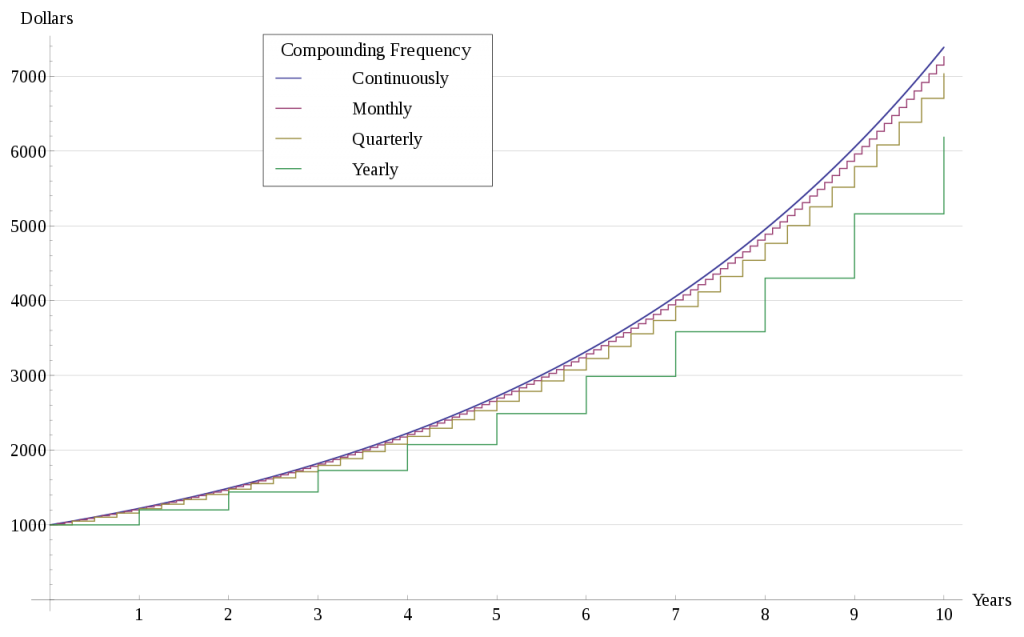
A mathematical formula

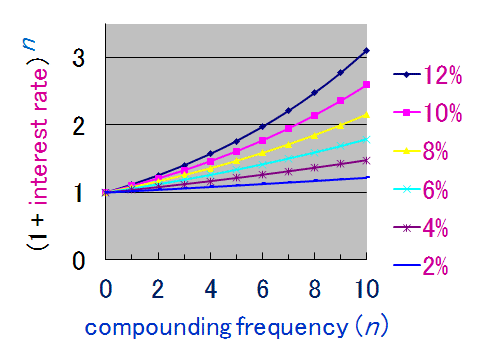
Math is nature’s way of saying, “this is truth.” And this is the mathematical formula used to express exponential growth.

A = final amount
P = initial principal balance
r = interest rate
n = number of times interest
applied per time period
t = number of time periods elapsed
You can choose to be on either side of the equation. Either someone who’s earning interest yourself, or someone who’s paying interest to others. But the choice is entirely yours, and it all depends upon how you choose to manage your money.

Most people don’t even bother to try to understand any of this, and it’s no surprise why they are always broke.

What banks do

Banks, credit card companies and money lenders are very aware of compound interest, and they use it every day to make millions of dollars. They call it an Annual Percentage Rate (APR) and this rate is basically a small percentage (in interest) that you pay them every month for buying something today, which you intend to pay off in the future.

APR is very small amounts of money, but when compounded over months and years it adds up to a substantial amount. And when you factor in thousands/millions of customers paying those interest payments, it’s enough to make the banker rich. And this is just one item in their bag of tricks.

So what is the point of all this? If you can understand compound interest, you can use it to your advantage. Instead of always paying interest to your credit cards and loans, you can earn it from them if you never carry a balance.

Take advantage of any opportunity you have to gain compound interest. Learn as much as you can about annual percentage yields, capital gains and dividends. Because if you don’t increase your financial intelligence, someone else who knows more about money will find a way to transfer it from your hand to theirs.


Disclaimer: This article was written for educational and entertainment purposes only. This is NOT financial advice. Always do your own research and please consult with a licensed attorney before making any serious investment. We are not responsible for any investment decisions that you choose to make.

Plastic is a brilliant invention. It has greatly contributed to our modern industrial revolution. No other material can come close to plastic in terms of mass production and flexibility in design.

Plastic is one of the easiest and cheapest ways to shape and mold parts and products into any form desired. But what is the problem?

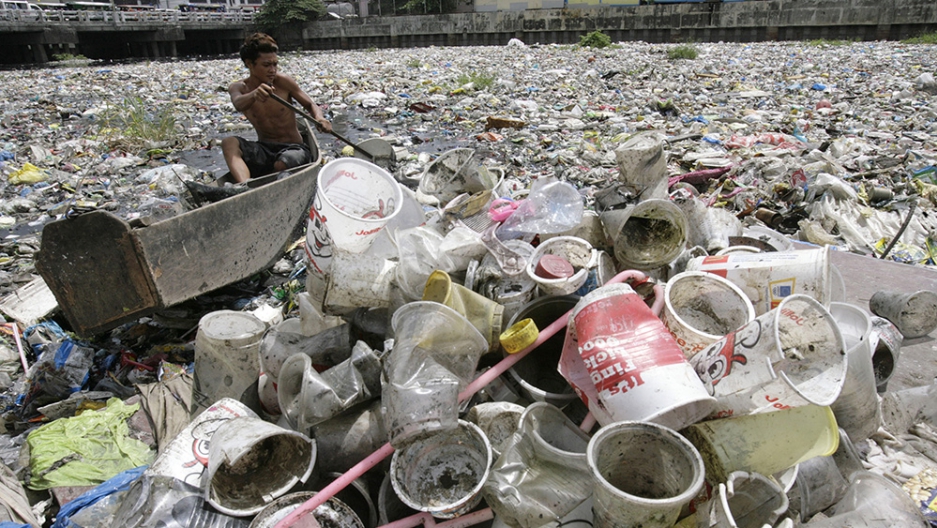
The problem is that this miracle invention is everywhere. And there is SO MUCH of it, that it’s ruining the planet.

Plastic garbage is literally now in every ocean on earth. It’s not just the bags and straws, but even smaller particles of plastic debris that mostly go unnoticed. These cause even greater damage to the environment and to our bodies.

A recent scientific study has found that humans eat thousands of bits of tiny plastic particles every year. Even more shocking, they estimate that an average person could be ingesting approximately 5 grams of plastic per week. The equivalent of eating one whole credit card.

But the problem doesn’t just end there. The cost of using cheap plastic materials has tragic consequences for marine and animal life that most people take for granted.

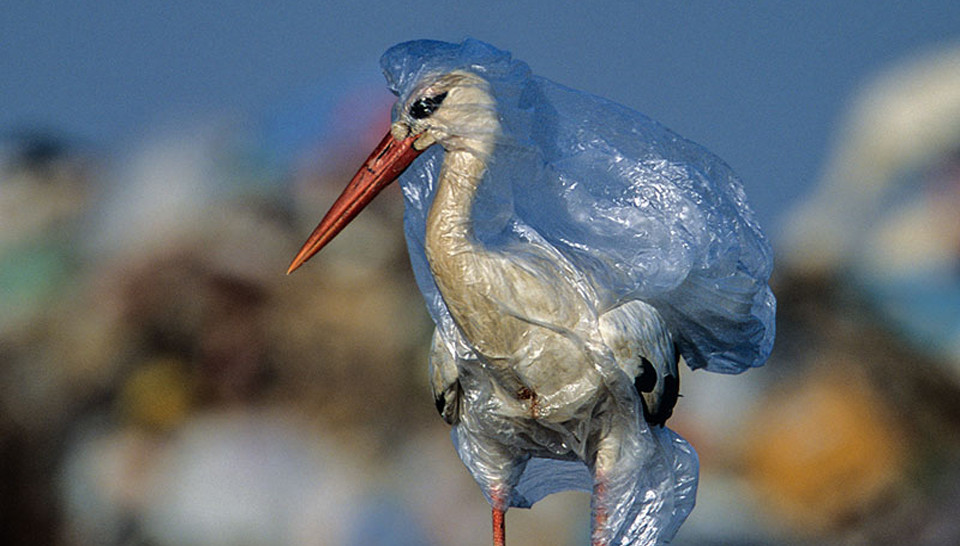
A bird entangled in a plastic bag.

Every single week, at least 100,000 marine animals and over 1 million sea birds are found dead entangled up in plastic waste. Many of those animals who survived were brutally injured from the plastic waste entering in their environment.

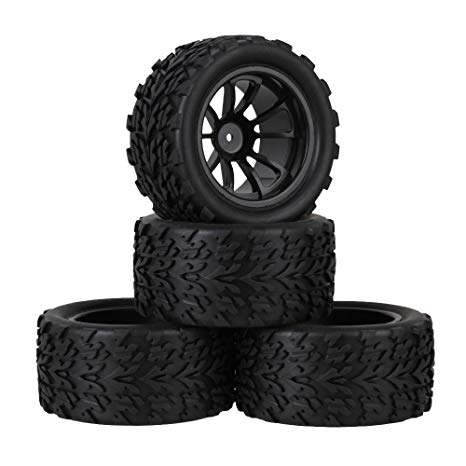
Plastic also comes off of the tires that we drive down roads[b] and rain pushes this plastic into rivers, streams and oceans.

Microplastic particles find their way into the bellies of fish in the ocean, and when we eat those fish, the plastic then finds it’s way into our digestive system as well. And yet, even smaller Nanoplastic particles fall to the earth in rain drops, and scientists have even found them in vegetables as well. 

This is a huge problem and its out of control.

Buying bottled water?

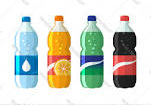
Drinking water is how you clean your body from the inside, and we all should drink plenty of water to stay healthy. It’s best to drink purified/alkaline or john ellis water, but we DON’T recommend to drink water out of plastic bottles unless you also want toxins coming from the plastic to get inside of you.

The main problem with drinking out of plastic water bottles is that those bottles can leak Bisphenol-A (BPA) into the water, which is toxic. You might be thinking, “But my plastic is BPA-free” well, it’s now known that BPA-free products have merely replaced BPA with bisphenol-S (BPS) or bisphenol-F (BPF). And even small concentrations of BPS and BPF may disrupt the function of your cells in a way similar to BPA. Thus, BPA-free bottles may not be an adequate solution.

Even moments after birth, babies are given formula out of a plastic milk bottle.

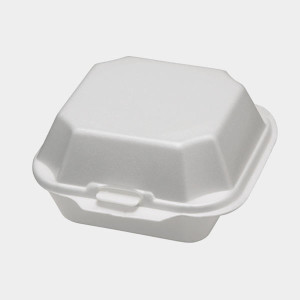
Yet, in spite of all the increased awareness, even if people stop buying plastic bottles, they continue to put food in plastic-wrap, styrofoam[a], use plastic bags, drink from plastic cups, and eat with plastic plates, utensils & straws.

Everyone says that smoking and other things cause cancer, but nobody ever says anything about all the damage plastic is doing. Plastic is everywhere yet largely remains ignored.

What you can do

The first and easiest thing you can do is to eliminate plastic from your life as much as possible. Consider a few things.

Stop buying and using plastic as much as you can. This includes plastic cups, straws and bags. Use paper bags instead. Paper will decompose very fast (2-6 weeks) if exposed to the elements, so using paper bags from the grocery store should always be a preference.

Drink water from glass or stainless steel. Glass takes 1 million years to decompose, and metal is not biodegradable. So choose stainless steel or (even better) glass bottles to store your purified water. It’s also much cheaper if you buy purified water in 1 or 3-gallon glass jugs as opposed to a small 8-ounce plastic bottle from the store.

If you live in a first-world country, there are state & government programs paid to haul the plastic waste away. But it doesn’t just disappear, it just gets dumped somewhere else, (like a third-world country) and then it becomes someone else’s problem….

Recycling is not enough

Why is recycling not enough? Because:
1. — plastic bags and other odd shapes can’t be recycled, and
2. — much of that plastic will still end up in a landfill somewhere, or in the ocean.

Cheap packaging materials make huge profits for soft drink and industrial companies and so they will continue to sell their products in such harmful plastic packaging as long as consumers continue to buy them.

It’s bad enough that most sources of drinking water are contaminated with microplastics, but you can significantly reduce your exposure to plastic by avoiding buying it and not using it as much as possible.

To recap:

  • AVOID: Plastic bags, Plastic water bottles, Plastic cups & straws
  • USE: Paper bags, Reusable glass bottles, Ceramic/metal cups & silverware

Remember, if you are not avoiding plastic you are contributing to the problem. Share your thoughts on plastic in the comments below.


Footnotes

[a] In 1941, Dow Chemical Company invented a proprietary process to make their trademarked and well-known polystyrene foam product, also called “styrofoam.”

Polystyrene (PS) plastic is a naturally transparent thermoplastic that is available as both a typical solid plastic as well in the (more commonly seen) rigid foam material.

Polystyrene contains the toxic substances Styrene and Benzene, suspected carcinogens and neurotoxins that are hazardous to humans. Hot foods and liquids actually start a partial breakdown of the Styrofoam, causing some toxins to be absorbed into our bloodstream and tissue. However many restaurants still put hot takeout (food-to-go) in a Styrofoam container.

[b] Tires today consist of about 19 percent natural rubber and 24 percent synthetic rubber, which is a plastic polymer. The rest is made up of metal and other compounds.

Although we loosely call them ‘rubber’, engineers really did reinvent the wheel. Vehicle tires are actually made from a complex blend of mostly synthetic materials and chemicals, including various types of plastic. 

There are many types of investors. Stock investors, real estate investors, crypto investors, and the list goes on. But in this article we will discuss a particular type of stock investor: the kind who focuses on dividends.

Lets say for example, you decide to purchase some shares of the Nike stock. When Michael Jordan releases a new pair of shoes, the sales from the shoe takes off. Nike makes profit from the sale. They turn around and re-invest the profit into the business. Then they pay a portion of the profit as a dividend to shareholders (you).

The more shares of a stock you buy, the more dividends you will earn. Not all stocks pay dividends, but some pay dividends yearly, others quarterly, and others monthly.

dividend is a payment made by a corporation to its shareholders, usually as a distribution of profits.

Wikipedia

Reaching financial independence

Financial independence is when your assets (investments) are large enough that they yield returns (dividends) to cover all of your expenses. Many investors view the point of earning $1000 in dividends each month as the first step towards financial independence.

Lets do some math, to figure out what it would take to get there with a relatively small stock. So lets take for example, Office Depot (ODP).

As of writing this blog, ODP costed about $3 per share. It returns a dividend payout of about $0.10 cents. So $1000 ÷ $0.10 = 10,000. And $3 x 10,000 = $30,000. So you will need 10,000 shares (approx $30,000) of ODP in order to see a dividend return of $1000 quarterly.*

You might be wondering why you should even care. What’s the advantage here? Here are a few things to consider.

1) Cash flow

A dividend is your share of the profits.

If you gain enough cash flow from dividends you could reach financial independence. What this means is no more trading hours for a paycheck. You’ll have your money working for you, to generate more money.

On dividend.com there is a long list of dividend stocks that will pay you every month. You can use these stocks to start to generate cash flow. If you invest in enough of these kinds of stocks, you can earn dividends almost every day.

2) Lower taxes

There is a Much lower tax liability. Your federal income taxes for those dividends is MUCH lower than your taxes from earned (job) income.

Dividends are taxed at 20%, 15%, or 0% rate, depending on your tax bracket. This means that the amount of taxes you pay on dividends will depend upon your earned income, and this of course may vary.

If you never purchased stocks or earned dividends before, don’t worry. It’s better to start at the bottom than not at all. And its also getting much easier to do so with apps like Robinhood and M1 Finance.

* (ODP pays quarterly, but many dividends pay monthly)


Disclaimer: This article was written for educational and entertainment purposes only. This is NOT financial advice. Always do your own research and please consult with a licensed attorney before making any serious investment. We are not responsible for any investment decisions that you choose to make.

Imagine getting a notification on your phone that a delivery has just arrived at your front door. You come outside and pick up a package, not from a human carrier—but from a fully autonomous six-wheeled robot.

Meet the Amazon Scout.

This is Amazon’s latest technological innovation, designed to improve the “last mile” segment of package delivery.

The Scout’s delivery method is more time efficient than a human carrier, because its done by a mathematical algorithm. Plus, multiple robots can cover more ground in a shorter period of time than one person.

Right now the Scout is limited to smooth surfaced sidewalks, but eventually the goal is that it will navigate stairs, complex obstacles, and various rough terrain.

Amazon claims that these devices were “created by Amazon” but it should be noted that the original design of this robot was created by Starship Technologies. Also, this same device was previously tested by companies such as Dominos Pizza, DoorDash and Pepsi.

Hitting the streets

Amazon has already begun testing it with just six Amazon Scout devices, delivering packages during daylight hours in the neighborhoods of Snohomish County, WA.

Trying to deliver perishable food (that needs to stay warm/fresh) may not turn out as well as delivering packages, especially if this robot moves at the speed of a human walking. But the cost savings alone is a huge benefit of using this device for a job that hasn’t changed much in centuries. It’s a remarkable technological improvement over relying upon human labor.

However, reactions from consumers indicate that many people are skeptical that such a device could survive out in public.

@saracsalinas How will Amazon Scout survive in bad neighborhoods and neighborhoods bordering bad ones. We live in a world where people feel it’s OK to steal packages.

Sara Salinas via Twitter

Google has made no official comments regarding this, but these devices come equipped with multiple cameras all around, so they can “see” what you do to them, they have an internal GPS tracker, and the “hood” will remain locked unless someone with the (Amazon) app approaches to unlock it.

So unless someone forgets to properly close the hood so that it locks, the chances of theft are VERY unlikely. In fact, someone already tried.

Huge cost savings

Any company that can successfully achieve automation by this means could potentially save themselves billions of dollars each year.

A standard delivery driver might earn a salary of around $40k to $50k/year. But these robots cost just a one-time price of $5,000 and of course, as the technology improves that price is getting cheaper.

In Washington D.C these robots are not just surviving, they are thriving. As the D.C. Council just recently passed legislation to permit the large-scale deployment of delivery robots across the city. So you might see them popping up soon in a neighborhood near you.