Category: Blog

Bitcoin is the worlds first decentralized peer-to-peer digital currency. What this means is that for the first time in history, people have the ability to transfer money from one person directly to another person without going through a central hub, like a Bank.

The original creator of Bitcoin (a person or group who used the pseudonym ‘Satoshi Nakamoto‘) chose to remain anonymous and then disappeared after unleashing this highly disruptive technology to the world in 2009.

A superior computer network

Bitcoin is made up of a global network of computers which all run the same software. It’s based upon a mathematical formula that nobody owns. There is no company that owns it, no central server, and no CEO in charge. The power of the network is delegated out to the end users of the network. This is what we mean when we say its “decentralized.”

The image shows a depiction of centralized systems (like Facebook) which have a single point of failure; as opposed to decentralized systems, made up of nodes and masternodes. In this model, there is no center to the network.

All nodes contain a complete copy of the entire digital ledger, and the nodes individually verify the transactions in the ledger based upon a complex consensus algorithm. Nodes can join and leave the network at any time, but when they rejoin they must “catch up” to the other nodes by re-downloading all of the transactions so their copy of the entire ledger is also complete.

Each node needs a complete copy of the digital ledger (or blockchain) before they can have a share in the process of verifying transactions. This verification process is called mining, but we will discuss that another day.

Fake copycats

There is only ONE true Bitcoin, and it looks like this.


But as with any kind of valuable asset, there will always be cheap imitations that are made by others who try to either mirror, improve upon, or steal money from uninformed investors who think they are buying the real thing, and Bitcoin is no exception, there are dozens of fake Bitcoin look-alikes but there is only one true Bitcoin.

Here are a few examples of fake copycats:

Bitcoin SV (BSV), Bitcoin Cash (BCH), Bitcoin Interest (BCI), Bitcoin Gold (BTG), Bitcoin Diamond (BCD), First Bitcoin (BIT), BitcoinX (BCX), Bitcoin Atom (BCA), Bitcoin Private (BTCP), Bitcoin Fast (BTCF), BitcoinZ (BTCZ), Super Bitcoin (SBTC), Lightning Bitcoin (LBTC), eBitcoin (EBTC), Bitcoin Red (BTCRED) and the list just goes on and on and on. If you put your money into buying any of these, you might as well just take that money and fling it out into the street.

What about hackers?

If one node contains a falsely injected transaction from an external attacker, the other nodes will not reach consensus and they will all reject that malicious transaction, therefore effectively killing that transaction from ever happening.

The larger the bitcoin network grows, the more resistant it becomes to attack. Because the larger the network is, the more computer processing power is needed to bring it down. To even try a 51% attack on Bitcoin today would cost somewhere around $60 billion dollars, so its just not feasible for most hackers.

Even though the amounts that are transacted can be publicly seen, the identities of the buyers and sellers are hidden, and all public and private keys are encrypted. All instances where people lost money was due to introducing a centralized 3rd party, or from using unsecured digital wallets.

But so far, the Bitcoin network has been running for 10 years without a single successful attack. Many have tried, but all have failed.

Why its groundbreaking

Bitcoin doesn’t close on weekends. It doesn’t care what country you live in and it knows no borders. You can send $10 dollars or $10 million dollars. For countries where the national currency is worth less than USD, Bitcoin is divisible up to 8 decimal places, so you can send micro payments (smaller than a penny.)

You can do all of this instantly, without anyone’s permission, from anywhere in the world, day or night, and the network fee is only pennies.

This image is a deep fake, but it makes a point – literally anyone can buy bitcoin.

Bitcoin is also non-custodial, meaning that your Bitcoin can be stored in a digital wallet that no one else can access except for you. Therefore, many banks view Bitcoin to be a threat to their existence. The idea of someone else holding your money (and charging a fee for this service) seems obsolete.

Some say that Bitcoin is a the dawn of a whole new age of money. Where the value of everything is tokenized into digital currencies and trust in banks is no longer needed. But whether or not Bitcoin really does lead to the end of centrally-controlled fiat currency, remains to be seen.


Disclaimer: This article was written for educational and entertainment purposes only. This is NOT financial advice. Always do your own research and please consult with a licensed attorney before making any serious investment. We are not responsible for any investment decisions that you choose to make.
The Standard American Diet (the SAD diet) is saturated in toxins.

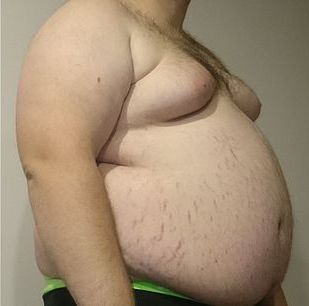
A man with a fat belly.

Sweets are loaded with sugar. Snacks are loaded with salt. Meat is loaded with saturated fat. The fact is, you’re lucky if there are any nutrients left at all—most have been stripped away and replaced with a cocktail of chemicals that you can’t even pronounce. And you don’t have to take my word for it, just look at the ingredients!

Anything with bread and meat (hamburgers, hot dogs, pizza and pastries) seems like the staple of the American diet. But there is an old saying, we are what we eat. And it shows.

According to the CDC, a whopping 40% of Americans are obese, and over 50 million Americans are living with diabetes. Out of every 100,000 men and women, approximately 439 of them will be diagnosed with cancer.

Why are things like this?

There are many factors that can be attributed to all of this of craziness, but largely (no pun intended) it comes down to what we eat.

The food that everyone is eating

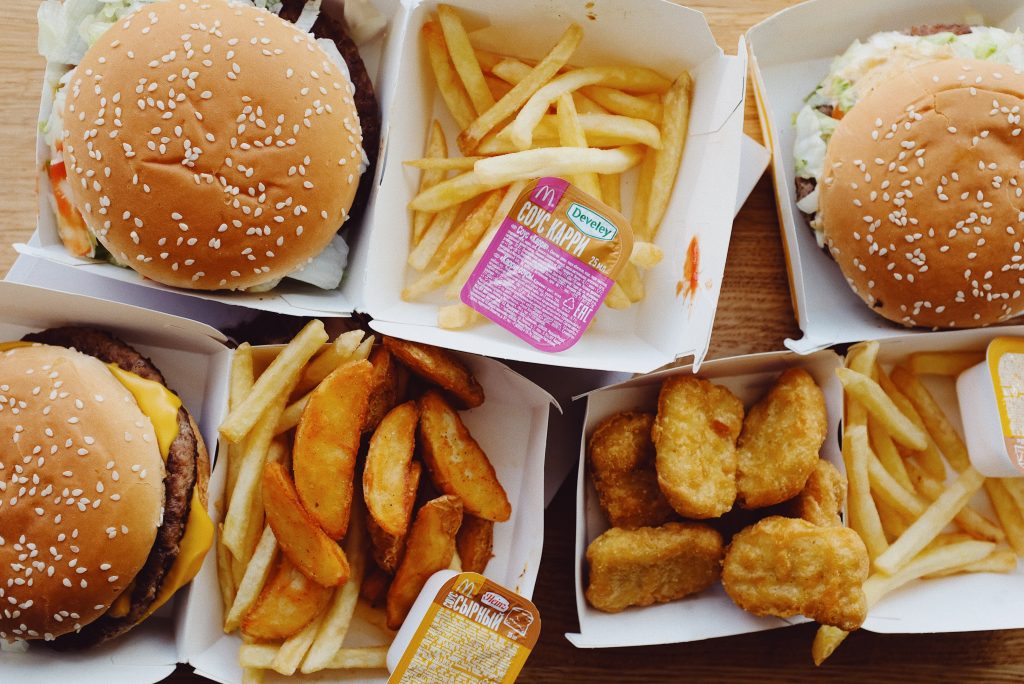
All fast food: burgers, fries, nuggets.

In most developed nations, cheap fast food is available in abundance, and we eat it constantly. We often gravitate towards foods that taste good, is cooked fast, and comes cheap.

We don’t eat to survive anymore, we aren’t even interested in the nutrients we need, because no foraging or hunting is necessary. It’s not about survival. We often eat just to satisfy our cravings for sugar, fat and salt. All you have to do is pull up to a drive-thru window.

The situation is no better when you shop for your own food.

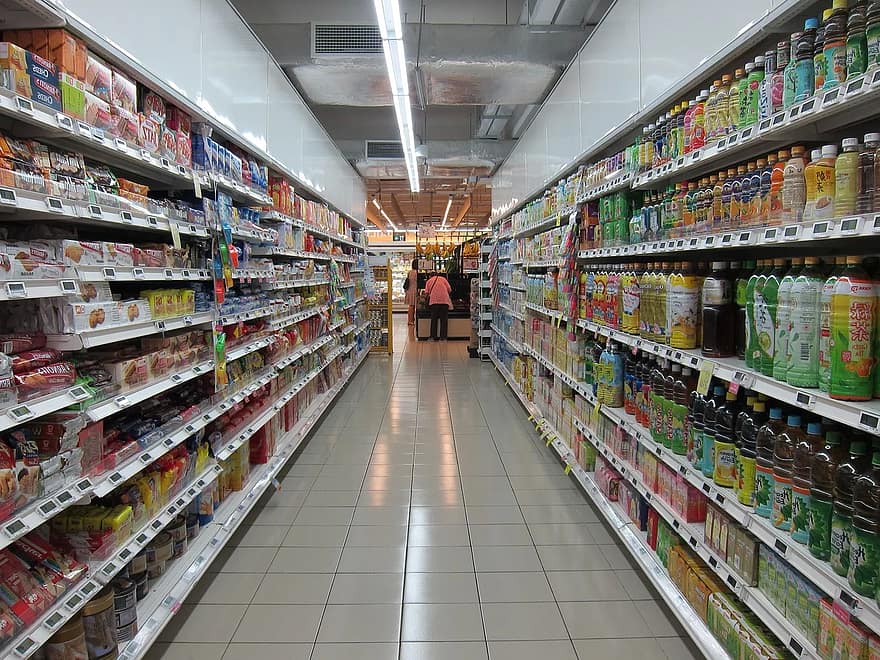
When you walk into a grocery store and go up and down the aisles you will see rows and rows of products that are boxed, packaged, and wrapped in plastic. Almost everything is processed. And when you start reading the ingredients, pretty much all of it looks to be unhealthy in some way and this is a real problem.

Cheap food comes at a great cost

Companies that operate in the food industry are constantly seeking to raise their profits. They do this by keeping their prices competitive and using the cheapest ingredients possible. This is the only way that they can make food in bulk and also keep their prices low.

Sadly though, even the “organic” options that they give us often still source cheap ingredients (and GMOs) because many businesses are solely interested in increasing their profits. It seems like money is always the only thing that drives productivity. Profits always take precedence over human health for them and nothing will change unless consumers wake up and only start buying healthier options.

Every single time we eat, we are either fueling disease or feeding health. But we do have a choice. We can eat highly processed foods, or, we can eat whole/natural foods.

Ineffective food regulations

Even though the FDA in America requires food manufacturers to put nutrition labeling on the packaging of their food, it doesn’t strictly enforce the amounts of additives (like sugar salt) that gets put into such products.

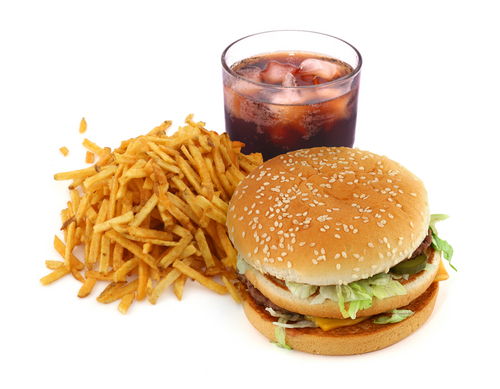
A burger, fries and a coke.

Chemicals are added into the mix of ingredients to help processed food have a longer shelf-life, and at fast food restaurants, you can buy a hamburger as cheap as $1 dollar, whereas a salad might cost almost $5 dollars. Many families struggle financially to afford their necessities so naturally they will look for cheaper options.

The more flavor these foods have (usually provided from sugar, fat and salt) the more consumers seem to like them. The more sales these companies make, and the more wealthier a few executives at the very top become. But the majority of consumers suffer with poor health, a shorter life span, and diminished happiness as a result of poor nutrition.

So we cannot solely rely upon food regulations to get every single thing right.

Eating food is essential for human survival, but the food industry is primarily a business at its core, and they are out to make profits. And since selling of food for profit is something that won’t change any time soon, what can be done?

Rising above it

Consumers are often confused by all of the conflicting opinions about nutrition that some think EVERYTHING is bad. But the truth is, everything is not bad.

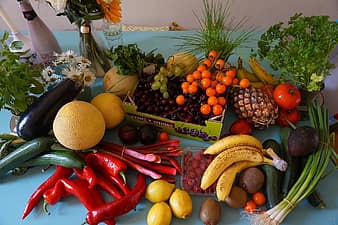
Whole foods: fruit, berries, bananas, and green vegetables.

The healthiest foods that you can eat are the foods that come directly from nature: whole foods like fruits, vegetables, legumes, nuts, oats and grains. These foods don’t cause any adverse effects from eating them over a prolonged period of time. In fact quite the opposite is true; people lose weight, they have improved health, and may even live longer. These foods are packed with phytonutrients and antioxidants which nourish our bodies, and remove free radicals.


FACTS

  • No nutritionist in the world will ever say that eating fruits and vegetables is unhealthy.
  • 90 percent of all cancers are due to poor diets that contribute to the growth of free radicals.
  • Most diseases are NOT hereditary, it’s our habits that are hereditary. But habits can be changed.

Changing how we eat also means we can educate ourselves about nutrition and then work hard to stick to a healthy diet. Many foods that taste extremely sweet or savory are that way because huge amounts of refined sugar and salt. Very little nutritional value. Additionally, foods with a lot of oil have too much fat, which is not healthy. Try to remember that.

Try to substitute a candy bar for some fruit. Replace a hamburger for oatmeal. Swap salty/oily snacks for grapes, nuts, or other kinds of berries. Think of your body like an investment for the future. Eventually your body will stop craving foods that offer little to no nutrition, and you’ll feel more energy and vigor from giving your body what it needs so it can run at peak performance.

It might be a bit more expensive to buy natural organic foods, but healthcare is also not cheap. So eat clean today, and save on hospital bills tomorrow. Good health to you!


Additional Resources


Disclaimer: the information provided on this web site is for educational purposes only, and does not substitute for professional medical advice. The author of this blog is not a licensed dietitian or medical professional. Please consult with a licensed medical professional or healthcare provider if you are seeking medical advice, diagnoses, or treatment. We are not responsible for any decisions that you choose to make.

The early American presidents had a very different view of money than most people today. We can still see their faces printed on the front of our bills, but their distant words of wisdom go mostly unheard.

They understood that having centralized control of an entire nations money supply is something that would not be in the best interest of the majority of people.

Thomas Jefferson once said,

If the American people ever allow private banks to control the issue of their currency, first by inflation, then by deflation, the banks and corporations that will grow up around them will deprive the people of all property until their children wake up homeless on the continent their Fathers conquered…. I believe that banking institutions are more dangerous to our liberties than standing armies…. The issuing power should be taken from the banks and restored to the people, to whom it properly belongs.

And he was right. That reality is already here.

  • 40 million Americans are living on food stamps
  • Millions more are homeless living in tents
  • And 80% of Americans are living paycheck to paycheck (in other words, broke).

Thomas Jefferson also said,

The modern theory of the perpetuation of debt has drenched the earth with blood and crushed its inhabitants under burdens ever accumulating.

And how true these words are. The Federal Reserve bank does nothing more than continuously debase the currency by printing more and more dollars, and raising the debt ceiling to greater highs. Those who are the most impacted by this are the poor. Without fair and equal access to financial literacy, the only thing that most people will do is consume liabilities, and continue to get crushed under the ever increasing burden of debt.

Since private central banks control the creation of money, and smaller banks distribute loans and credit, bankers own two-thirds of the entire worlds money supply. The divide between those who are rich and poor is as wide as the grand canyon.

In total, the United States is now over $30 trillion dollars in debt, inflation keeps rising, and its getting worse every day. But who can pay this debt back? The truth is, this is a debt that can never be repaid. It’s beyond that now, it’s growing at an exponential rate. But the tax laws still obligates every single working individual to pay federal taxes regardless.

Abraham Lincoln once said,

The government should create, issue, and circulate all the currency and credit needed to satisfy the spending power of the government and the buying power of consumers. The privilege of creating and issuing money is not only the supreme prerogative of government, but it is the government’s greatest creative opportunity. The financing of all public enterprise, and the conduct of the treasury will become matters of practical administration. Money will cease to be master and will then become servant of humanity.

He believed that only the government (and not any central bank) should have control over the distribution of wealth.

I think many would argue against this view, but the core of his argument is the same; he knew that private centralized banking would lead to huge divides between the rich and the poor and humanity would ultimately suffer as a result.

During his presidency, Abe Lincoln also attempted to solve this problem by issuing greenbacks, a (now defunct) paper currency that was created by the United States government and not any bank. But his idea never became a reality because he took a bullet in the back for trying to give African-Americans equal rights.

Today, the money-creation process is solely the privilege of the Federal Reserve System. Most people don’t realize that they are not a government agency — they are a private organization that was created in secrecy, and history shows that they covertly stole the money-creating power from the American people.

The recent move towards decentralized digital currencies like Bitcoin, is however, a very small push back, it’s a stepping stone towards giving this power back to the people by creating value in virtual currencies that operate in a peer-to-peer fashion without the need for any kind of middlemen. But who’s to say if this will even happen. It most likely seems that the ruling authorities will destroy it before they allow money to ever become privately owned by citizens. But what do you think?

Do you agree with the dead presidents? What do you think about the Federal Reserve bank? And do you think a new kind of peoples money, (like Bitcoin) would help? Leave your thoughts in the comments below.


Additional Resources


Disclaimer: This article was written for educational and entertainment purposes only. This is NOT financial advice. Always do your own research and please consult with a licensed attorney before making any serious investment. We are not responsible for any investment decisions that you choose to make.
Robotics and AI are creating a paradigm shift in how companies conduct business today. Why hire additional human labor when a robot can do the job with fewer errors and work 24/7 without the need for breaks or time off? It may sound like fiction, but that reality is already happening.

Blendid is a new startup using automation robotics and AI to transform the way food is prepared and served to meet the health and taste preferences for consumers.

Blendid offers autonomous, food robotics kiosks that use advanced technology – including robotics, machine vision, and artificial intelligence – to prepare and serve healthy, fresh, and delicious smoothies, known as Blends. Fruit blends are customized and made-to-order based on an individual’s preferences, using only fresh fruit and vegetables.